What to Look for in a Gas Fireplace Supplier: A Quality Manager's Checklist
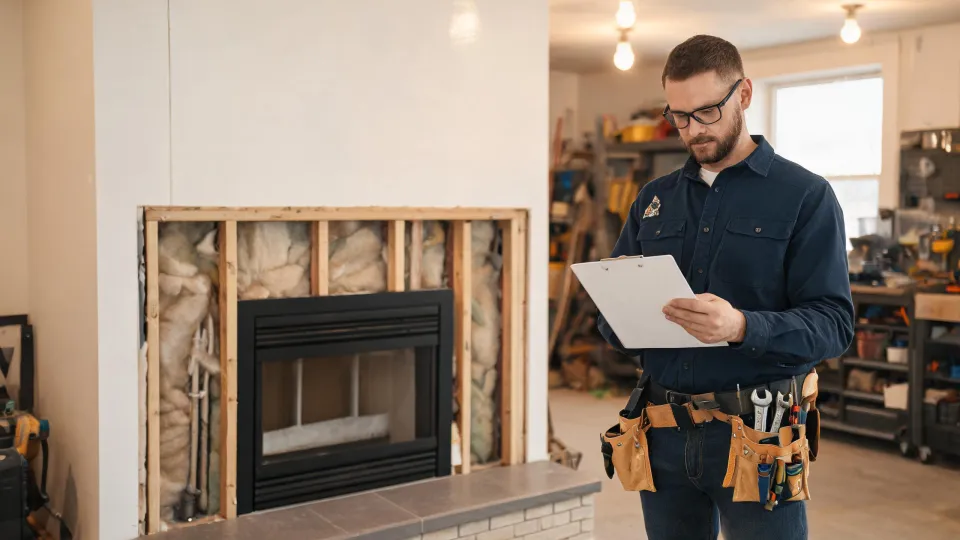
The three things that predict whether a gas fireplace supplier will work out: spec compliance on the first delivery, documented ductwork and venting compatibility, and a replacement parts pipeline you can actually verify. Price matters, but it's fourth. I've watched six-figure orders go sideways because a buyer picked the vendor with the lowest per-unit cost and the loosest spec sheet.
I run quality and brand compliance at a mid-size hearth and HVAC retailer. Every incoming shipment — gas fireplaces, wall heaters, gas logs, wood stoves, ductwork components, thermostat controls — gets reviewed before it reaches our floor. Roughly 200 unique SKUs a year. In 2023, I rejected 11% of first deliveries. Maybe 12% — I'd have to pull the exact number from our system. The point is: those rejections weren't random. They clustered around a handful of issues a careful buyer can screen for before the first PO goes out.
Start With Spec Compliance, Not Price
When a supplier quotes you, ask for the actual spec sheet — BTU output, clearances to combustibles, venting requirements, gas inlet sizes, efficiency ratings. All of it. Tied to specific model numbers. Not "typical." Not "standard."
Here's the part that catches people off guard: "meets industry standard" is a phrase that comfortably covers a 15–20% tolerance range on most specs. A supplier can technically meet the standard and still ship a unit at the low end of every tolerance — which is not what you want in a gas heater where clearance numbers matter for fire safety.
We got a batch of 40 wall heaters in early 2023 where the specified clearance was listed as 6 inches. Measured, the actual minimum clearance was closer to 8. Two inches of variance doesn't sound dramatic until you're installing them into tight alcoves and half your layout plans don't work anymore. The vendor claimed it was "within industry tolerance." Maybe. But it wasn't within the contract, so they ate the remanufacturing cost.
Now every purchase contract we sign includes a first-article inspection clause. One unit gets verified against spec before the full run starts. Costs the supplier nothing extra. Saves everybody a batch rejection six weeks later.
Ductwork and Venting Compatibility Isn't Optional
This one trips up more buyers than any spec issue. A gas fireplace doesn't operate in isolation — it connects to ductwork, ventilation systems, air handling units, and thermostat controls. If your supplier can't document how their equipment interfaces with your existing or specified infrastructure, you're going to discover whatever mismatch exists on install day. Which is the worst possible day.
I only started asking about ductwork sizing after ignoring it once. The reverse validation of that lesson: we bought a fireplace unit at a really good price. Nice unit. What the vendor didn't mention was that their standard vent collar was a quarter inch off from our ductwork diameter. That quarter inch cost us roughly $2,300 in adapters, extra labor, and a delayed install. All because I didn't ask one question on the front end.
When you're evaluating a ductwork distributor or a hearth equipment manufacturer, ask directly: what venting configuration does this unit require, what's the connector type and size, and does it work with the air handling setup we're running? Suppliers built for B2B work will have this documented. If they say "it's universal" or hand-wave, treat that as a red flag. Nothing in HVAC is universal.
The Replacement Parts Pipeline
This is the criterion that separates a commodity vendor from a long-term supply partner. Gas fireplaces, gas logs, wood stoves, and heating equipment need parts over time — thermocouples, pilot assemblies, gas valves, thermostat controls. If your supplier can't tell you where those parts come from, how fast they ship, and whether they'll still be available in three years, you're buying future support headaches along with the hardware.
In 2022, two years into a relationship with a supplier, a discontinued pilot assembly left us scrambling. Customer had a unit under warranty. We had no part and no realistic ETA. That single experience cost us a customer relationship and about $4,000 in expedited sourcing from a third party (ugh, still bothers me).
Now, before we sign with anyone, I request a replacement parts catalog — part numbers, availability windows, stated lead times. Some suppliers have this ready in a day. Others never get back to me. The ones who never get back usually don't have the supply chain depth for a real B2B relationship. That's the tell.
Where Does Price Fit?
Price matters. It's just not first. If you're buying 500 units and the spread between two suppliers is 8% per unit, that's real money. But if the cheaper supplier adds three weeks to your lead time, creates a 15% rejection rate, or can't supply replacement parts on a reasonable timeline, the savings evaporate fast.
Framework I use:
- Total landed cost — unit price + shipping + duties + any adapter or retrofit costs
- Rejection and rework cost — even a 5% rejection rate on 500 units adds up fast
- Support cost — how many hours does your team burn chasing specs, parts, and clarifications?
- Opportunity cost — what orders did you lose because a delivery slipped?
I learned this one the hard way. Saved $4,500 on a bulk order of gas logs by going with a lower-priced vendor. Ended up spending around $11,000 on returns, replacements, and a customer who still isn't fully happy with how it went. The math doesn't lie. (Note to self: run the total-cost model before the PO, not after.)
When This Checklist Doesn't Apply
Fair caveat: this whole approach assumes you're buying at some volume with a spec-driven process. If you're a small operation ordering 20 units once a year, the calculus shifts — you might prioritize a supplier who handles small orders smoothly over one with the most rigorous spec documentation. Different game.
Also, if you're working with a fully custom design — non-standard venting, unusual clearances, private-label housing — the conversation changes. You need a manufacturer capable of OEM work, and that's a smaller pool. Companies like Empire Comfort Systems operate in that space with full-line hearth and HVAC manufacturing plus private-label capability. But the evaluation criteria don't change: can you hit spec, do you understand the ductwork interface, will you stand behind the parts supply? The scale is different. The checks are the same.
One last thing: none of this replaces an actual sample inspection. Specs on paper and specs in a warehouse can diverge. If you're committing to volume, order one unit first. Open it. Measure it. Check the connectors. Run the thermostat controls through a full cycle. Two hours of inspection upfront beats six weeks of back-and-forth later. Every time.

Tariq Mahmoud is a plumbing and fixture analyst specializing in water-supply pipe, drainage systems, valves, faucets, sinks, toilets, shower hardware, and kitchen and bathroom fittings. He distinguishes ASME A112.18.1/CSA B125.1 performance requirements from NSF/ANSI/CAN 61 health-effects criteria while checking pressure, flow rate, leakage, operating torque, temperature limits, connection dimensions, and potable-water contact. His selection guides help engineers and developers compare code relevance, material compatibility, maintenance access, and documented performance for each installation.