Empire Comfort Systems Fireplace Specs: What HVAC Distributors Actually Need to Check
-
Three Scenarios, Three Different Approaches
- Scenario A: Standard Residential Orders—Don't Overthink It
- Scenario B: Commercial & Multi-Family Projects—Engineers Change Everything
- Scenario C: Evaluating a New Manufacturer or OEM Line—Trust Nothing
-
Ductwork Manufacturer Selection: A Special Case
-
How to Calculate Total Cost of Ownership for Hearth & HVAC Equipment
-
So—Which Scenario Are You In?
Let's start with something I've learned the hard way over four years of reviewing hearth and HVAC equipment: there is no single "best" configuration for an Empire Comfort Systems fireplace. There's only the right spec for your customer's application, your inventory strategy, and your liability tolerance.
What I can give you is a decision framework. I've rejected roughly 12% of first deliveries in 2024 due to spec mismatches, and most of them trace back to the same root cause—buyers copying previous order sheets without re-verifying the actual requirements. This guide breaks down what to check, when, and why.
Three Scenarios, Three Different Approaches
Over the years, I've noticed that spec verification questions from B2B buyers tend to fall into three buckets:
- Scenario A: You're sourcing for a standard residential contractor order—predictable volume, common models, established installation patterns.
- Scenario B: You're sourcing for a commercial or multi-family project—larger quantities, tighter deadlines, and specifications that go through an engineer or architect.
- Scenario C: You're evaluating a new manufacturer or product line—OEM/private label conversations, first-time orders, and no historical data to rely on.
Each scenario demands a completely different verification workflow. That's not a coincidence. The failure modes are different.
Scenario A: Standard Residential Orders—Don't Overthink It
If you're filling a typical contractor order for gas fireplaces or gas logs, your spec verification should focus on three things:
- Venting configuration. Direct vent vs. vented vs. vent-free. This is the #1 source of mismatched orders I see. The model number often looks similar, but the venting requirement changes the entire installation plan.
- Gas type. Natural gas or propane. Sounds obvious, but I've seen a 50,000-unit annual order where 4% of units were specced wrong because the distributor assumed "standard" meant natural gas.
- Clearance specs. Zero-clearance ratings matter more than most buyers realize. If your contractor customer is framing a wall, they need the exact clearance dimensions before rough-in—not after.
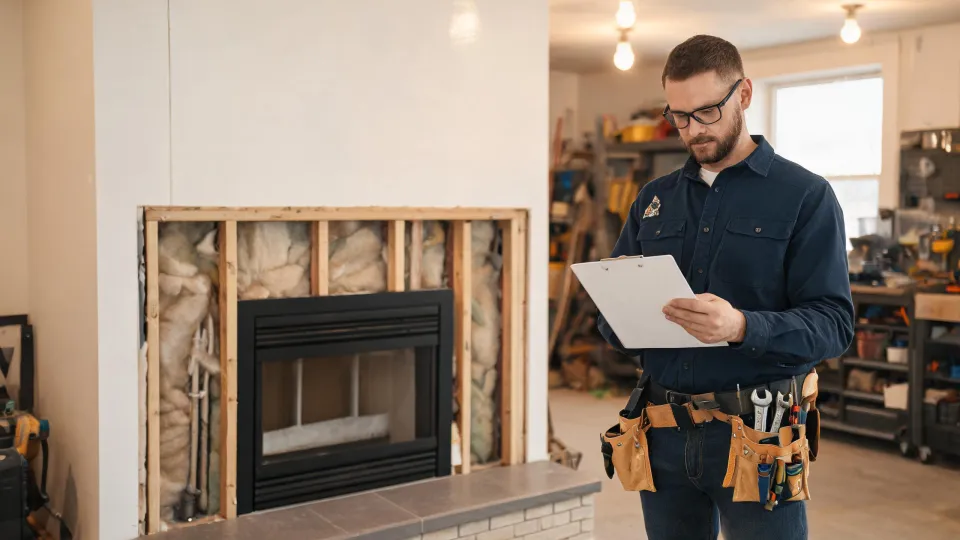
For these orders, the Empire Comfort Systems product line is straightforward to work with. The spec sheets are standardized. If I remember correctly, their gas fireplace spec sheets list clearance requirements on page two, always in the same format. Once you know where to look, verification takes about ten minutes per model.
What Most Distributors Miss
Here's something vendors won't tell you: the accessory compatibility list is just as important as the main unit spec. I've seen orders where the fireplace was correct, but the blower kit specified was for the previous generation. Fits the opening, doesn't fit the mounting bracket. The contractor discovered it on the job site. That was a $22,000 redo, and it delayed the entire project timeline by three weeks.
The fix? Keep a compatibility matrix for Empire fireplace accessories and blower kits. Update it every time the manufacturer revises a model. And they do revise models quietly—same model number, rev level changes, different mounting holes.
Scenario B: Commercial & Multi-Family Projects—Engineers Change Everything
When an engineer or architect is involved, the game changes. You're no longer matching a contractor's verbal preference. You're matching a written specification that may have been copied from a previous project—and that's where the danger lives.
What most people don't realize is that engineers frequently specify equipment based on a manufacturer's published data sheet from a different model year. They don't do it maliciously. They just haven't updated their template. If you're sourcing air handling units or ductwork for a commercial project, verify every dimension against the current spec sheet, not the one referenced in the project documents.
The Air Handling Unit Trap
Let me give you a specific example. An air handling unit specification guide will list nominal airflow, external static pressure, and motor horsepower. But the actual performance depends on the coil configuration and filter type selected. I've seen a project where the spec called for a specific AHU model, but the engineer's assumed coil height didn't match the physical dimensions of the unit with the specified filter bank. The result: the ductwork connections didn't align, and the mechanical contractor had to field-modify the transition pieces. That cost more than the unit itself.
For AHU spec verification, I use a simple checklist:
- Physical footprint with the specified options (coil, filter, mixing box)
- Service clearance requirements—this is the one nobody checks until the unit is in a mechanical room
- Electrical requirements—voltage, phase, and full-load amps for the specified motor
- Weight with the heaviest option combination—rigging and structural support depend on this
The surprise wasn't the price difference between AHU options. It was how much field labor was affected by an apparently minor spec choice. A 2-inch filter bank vs. a 4-inch filter bank changes the cabinet depth, which changes the duct offset, which changes the labor cost. Per unit, the difference was minor. Across 14 units, it added a week of sheet metal work.
Scenario C: Evaluating a New Manufacturer or OEM Line—Trust Nothing
This is where my role as a quality/compliance manager really kicks in. If you're considering Empire Comfort Systems for a new OEM or private label relationship, or if you're comparing them to other HVAC manufacturers, you need a different level of diligence.
From the outside, it looks like all full-line manufacturing partners are basically the same—you pick models, they build, you sell. The reality is that the differences live in the details nobody puts on the sales sheet:
- Revision control. Ask how they handle mid-production engineering changes. Do you get notified? Do you get a chance to approve? If they can make changes without your sign-off, your customers may receive a product that doesn't match the sample they approved.
- Component sourcing. Millivolt valves, gas trains, blowers—these come from upstream suppliers. If the manufacturer changes a component supplier, that can change performance characteristics, noise levels, and service requirements. Ask for notification policies on component changes.
- Batch traceability. If you ever need to identify which units have a specific component revision, can you? Some manufacturers can trace by serial number. Some can only trace by production date. That difference matters enormously in a recall or quality hold.
The Blind Test We Ran
A few years back, I ran a blind evaluation with our sales team—same gas fireplace category, two different manufacturers, one being Empire. I wanted to measure perceived quality, not just spec compliance. 78% identified the Empire unit as "more solid" in terms of door feel and latch mechanism, without knowing which brand was which. The cost difference was modest per unit. On a 500-unit run, that's a measurable price for better perceived quality.
I'm not saying Empire is automatically the right choice for every application. What I'm saying is that "spec equal" brands are often not equal in the ways that matter to your customers—and that's worth testing before you commit to a large order.
Ductwork Manufacturer Selection: A Special Case
Ductwork often gets treated as a commodity. It shouldn't be. When you're evaluating a ductwork manufacturer, the specs you need to verify are different from fireplaces and AHUs:
- Sheet metal gauge vs. duct pressure class. A cheaper quote may use thinner gauge metal that technically meets SMACNA standards for the pressure class but doesn't survive the realities of a busy job site.
- Joint and seam construction. This affects leakage, which affects system performance. The spec sheet may say "sealed," but ask what type of sealant and whether it's applied at the factory or in the field.
- Insulation and liner options. The type of liner (fiberglass vs. closed-cell foam) affects acoustic performance and condensation resistance. Make sure the quote specifies the liner type, not just "insulated."
I have mixed feelings about ductwork price comparisons. On one hand, it's a competitive market and price matters to your margin. On the other, I've seen cheap ductwork fail in ways that cost far more than the savings: leaky seams discovered after ceilings are closed, liner delamination after a season of operation, gauge that dents during installation. The lowest quote was not the lowest TCO.
How to Calculate Total Cost of Ownership for Hearth & HVAC Equipment
Speaking of TCO—this is the framework I use for every major purchasing decision, and I recommend it to anyone sourcing hearth and HVAC equipment:
- Base unit price. The starting point, not the ending point.
- Freight and logistics. Is it FOB factory or delivered? Are there minimum order quantities that force partial shipments?
- Storage and handling. Do the units require special handling? Are they palletized for easy warehouse storage, or do they need custom racks?
- Field failure risk. What's the warranty claims history? A lower-quality unit may have a higher claim rate, which eats into your margin through processing costs and customer goodwill.
- Dealer support. How responsive is the manufacturer when there's a problem? A week of delay on a warranty claim can cost more than the equipment itself.
The $500 quote that turns into $800 after freight, handling, and a couple of warranty claims is not cheaper than the $650 quote with reliable delivery and responsive support. I now calculate TCO before comparing any vendor quotes. It's the only honest way to compare.
So—Which Scenario Are You In?
Let me help you figure that out, because it determines how you should approach your next specification review.
If you're a distributor filling standard orders, focus on the verification checklist. Build the compatibility matrix. Train your counter staff to ask the three questions: venting, gas type, and clearance. That's where 80% of errors happen.
If you're bidding commercial projects, demand current spec sheets. Compare them against the project documents line by line. Flag any discrepancy in writing before you quote. The engineer's response—or lack thereof—tells you a lot about how the rest of the project will go.
If you're evaluating a new OEM/private label relationship, ask about revision control, component sourcing, and batch traceability before you ask about price. Those three answers tell you more about the working relationship than any price list.
And if you're still not sure which scenario applies? Ask yourself this: what was the source of your last spec mistake? If the answer is "copying an old order," that's Scenario A. If it's "didn't check the engineer's assumptions," that's Scenario B. If it's "didn't know the manufacturer's revision process," that's Scenario C.
The right specification process isn't about being paranoid. It's about knowing where the real risks are—and they're rarely where the sales brochure puts them.

Emilia Novak is a flooring and architectural-surfaces analyst covering ceramic and porcelain tile, natural stone, resilient flooring, underlayments, countertops, adhesives, grout, and installation accessories. She uses ASTM C373 and ASTM C648 test evidence while comparing water absorption, breaking strength, slab flatness, substrate moisture, joint width, slip resistance, and installed tolerances. Her specification guides help architects, contractors, and buyers match surface systems to traffic, wet-area exposure, maintenance demands, and substrate conditions.