How to Evaluate Ductwork Manufacturers: The Cheap-Bid Trap vs the Total-Cost Approach
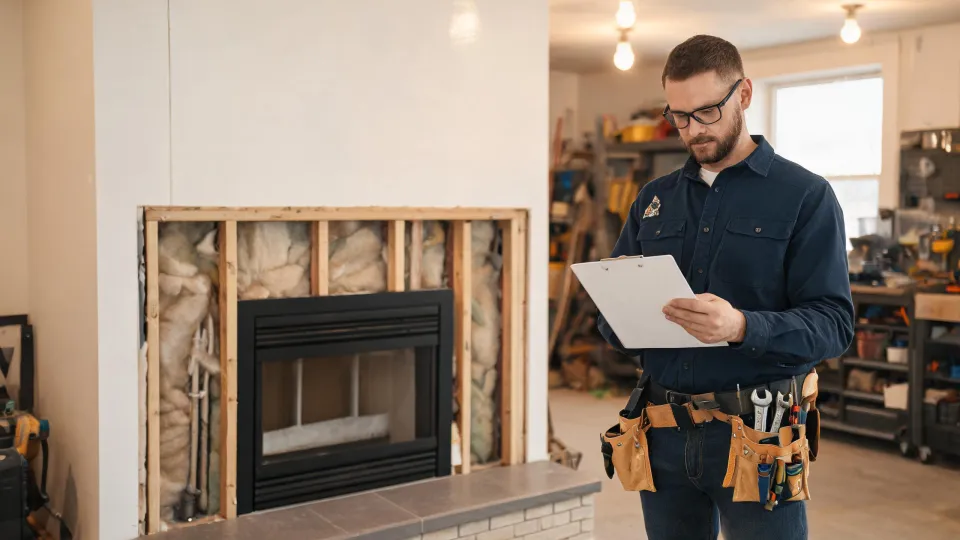
Two Ways to Evaluate Ductwork Manufacturers
When I first started selecting air handling unit suppliers for our HVAC projects, I assumed the lowest quote was always the best choice. Three budget overruns later—including a $3,200 mistake on a single ductwork order—I realized I'd been comparing the wrong things.
So here's a comparison based on 14 years of sourcing experience, documented mostly through my own failures:
Approach A: The Price-First Bid. Get three quotes. Pick the lowest number. Assume "standard" means the same thing to every manufacturer. Hope for the best.
Approach B: The Total-Cost Screen. Evaluate pricing transparency, specification handling, lead-time honesty, and quality consistency before you look at the bottom line.
These are compared across four dimensions. If you source gas fireplace components, air handling units, or plain ductwork, one of these approaches has probably already cost you money. The other one prevents it.
Dimension 1: Pricing Transparency
Approach A gets you a low unit price. Then the "accessories" appear.
In 2021, I approved a 240-piece ductwork order with a manufacturer whose quote undercut the next bidder by 18%. What wasn't in the quote: pallet packaging ($340), different-width crate labeling ($120), and a "documentation fee" ($85) that appeared on the final invoice. The last one I had never seen in 14 years of sourcing. Total surprise: $545 on one order. (Should mention: that doesn't include the $75 re-stocking fee when we returned parts that didn't match the spec.)
Approach B looks more expensive at first. When we moved our gas fireplace component line to a full-line manufacturer, their quote ran 9% higher. But it covered delivery to our dock, standardized crate labeling, and no surprise fees. The final invoice matched the quote to the dollar. Oh, and their payment terms were 2% net 30—the other vendor wanted net 15.
Conclusion: The price-first approach appears cheaper at bid stage, but lands 8–15% higher in total cost on most first-time engineered orders. In our experience, transparent pricing beat low-ball quotes on everything except simple reorders of proven SKUs.
Dimension 2: Spec Handling
Approach A treats specifications as paperwork. Approach B treats them as a conversation.
In my first year (2017), I made the classic specification error: I assumed "standard ductwork gauge" meant the same thing to every manufacturer. I submitted our spec to three vendors. Two asked clarifying questions about pressure class and duct connection orientation—the basics you'd expect per SMACNA guidelines. The third—the lowest bidder—just processed the order. We caught the issue when our installation crew tried to fit 24-gauge duct where 22-gauge was required. $890 in redo plus a 1-week delay.
The same principle applies at the component level. When we ordered Empire Comfort Systems gas fireplace units for a 60-unit multifamily project, their order engineering team flagged a propane/natural gas orifice mismatch before production. One email, zero rework. That's what a spec conversation looks like.
I should add that this works the other way too. A manufacturer who asks 12 clarifying questions before quoting might be inefficient. The good ones ask the right three or four, and those questions save you from the field rework later.
Conclusion: A spec clarification takes five minutes. A field rework takes five days. The vendor who asks questions upfront is worth a price premium on any order with custom sizing, special connections, or fuel-type variations.
Dimension 3: Lead-Time Honesty
Approach A vendors quote optimistic ship dates and update you only when you ask. Approach B vendors build buffers into their dates, and they tell you about constraints before you sign.
Here's a concrete count: over the past 18 months, our pre-order checklist caught 47 potential errors, and 12 of those were lead-time related. Every single one came from Approach A vendors who gave "expected" dates without a plan for what happens if material or production slipped. We tracked this through Q4 2024.
Approach B looks slower on paper. But a ship date with a built-in 3-day buffer—stated openly—has a much higher chance of actually being met. At least, that's been my experience with manufacturers who have dedicated order-engineering teams rather than just a sales desk.
The counterintuitive result from 2024: our most "expensive" vendor, by unit price, had the best on-time delivery rate—94.7% against a 73.2% project average. They quoted later dates, then met or beat them every time.
Conclusion: The vendor who quotes later and commits beats the vendor who quotes early and slips. Every project we tumbled past its completion date in the last two years traced back to an optimistic ship date from an Approach A supplier.
Dimension 4: Quality Consistency
Approach A quality varies by batch. We've seen this with both low-cost duct manufacturers and, somewhat surprisingly, with specialty HVAC importers. The first order looks great. The second—produced on a different line, from a different mill—fails visual inspection.
Approach B quality is tied to documented process. The manufacturer samples before and during production, keeps test records, and hands you a certificate of conformance without you asking for it.
For gas fireplace components, this is non-negotiable. A seemingly identical component has UL or CSA certification requirements that are assembly-specific. The wrong vent configuration on a 50-unit order = $450 wasted plus a very awkward phone call with your customer.
What changed my mind: a full-line manufacturer walked us through their quality process during a plant visit. Not a marketing tour—they showed us the inspection hold points, the written checklists, and the previous month's scrap records. That level of transparency is the only reason I'm willing to pay an upfront premium.
Conclusion: Approach A vendors can be perfectly consistent for simple, uncertified products. For anything with pressure ratings, certification requirements, or custom components, Approach B's documentation wins.
Which Approach Should You Use?
Use Approach A when you're reordering an existing SKU that has shipped consistently at least three times, has no custom requirements, and doesn't go into a project with a hard deadline.
Use Approach B when:
- It's a first-time order for an air handling unit or engineered ductwork.
- The order has custom sizing, materials, or connections.
- You're sourcing gas or electric fireplaces with certification requirements.
- A delay costs you more than the price difference between vendors.
Our internal checklist takes about 10 minutes per purchase order. It asks four questions:
- What's not included in the price? (Shipping, packaging, lifting, documentation, re-stocking fees.)
- What are the tolerances? (Gauge, pressure class, duct connection orientation, orifice size.)
- What's the committed ship date—and what happens if it slides?
- What testing or certification documentation ships with the order?
We adopted this after the third rejection in Q1 2024. Since then: 47 potential errors caught, $8,740 in avoided rework, zero shipped-from-production surprises.
Here's the lesson I keep repeating to our team: a cheap quote is not a cheap order. The lowest-priced manufacturer on paper is simply the one who hasn't shown you the fees yet. That's not a jab at low-cost suppliers—it's just that in 14 years of sourcing, I've rarely seen a final invoice match the initial quote for a first-time engineered product.
If you're evaluating ductwork manufacturers—or you need an air handling unit supplier that won't generate these blog-worthy stories—ask the transparency questions before you ask the price questions. The order of those questions determines which vendors you'll be dealing with, and which mistakes you'll end up documenting.

Emilia Novak is a flooring and architectural-surfaces analyst covering ceramic and porcelain tile, natural stone, resilient flooring, underlayments, countertops, adhesives, grout, and installation accessories. She uses ASTM C373 and ASTM C648 test evidence while comparing water absorption, breaking strength, slab flatness, substrate moisture, joint width, slip resistance, and installed tolerances. Her specification guides help architects, contractors, and buyers match surface systems to traffic, wet-area exposure, maintenance demands, and substrate conditions.